Sunday, April 17, 2016

Old Memory

 
We lost mom this past week.  Betty Lou Fox Laughlin died 11-April-2016 at the age of 82, after a long struggle with Alzheimer's.  For many of you, I may never have mentioned her in conversation, it was just too difficult to do so.
 
I wrote the post below back in 2013, a time when she was more aware than she had been in the last couple of years.  It's a terrible, terrible thing to lose one's memories, to be unable to recall the names even of close family members.  On the other hand, it also removed the memory of her greatest loss and sorrow, the passing of my sister, Karen, in 1983.  A sword with two edges.  I know it was very difficult for my boys, knowing that she could no longer remember them.  But we must take some solace in knowing that the dying of those other, much more difficult memories, brought her well deserved peace.
 
Y'all take care,
  -  Mark
 

Old Memory
 
My mother is almost 80 years old now.  In Assisted Living, her memory is fading.  But certain things, old memories, still make her smile.  In her condition, it’s the recent memories that go first.  Over time, she seems to recall less and less, with the oldest memories accessible longer.
She and her friend, Nancy, grew up in a small (tiny) West Texas town, Breckenridge.  It started as a farming community in the 1870’s and rose to a population of around 3,000.  For a brief time in the early 1920’s, it was a bustling Oil Field Boom Town, the kind you see in movies with wooden derricks everywhere, tents, make-shift saloons, and a population of over 30,000 !  But that had all calmed down before mom was born, and the population hasn’t been more than around 5,000 since.
Since its West Texas, lots of folks had horses, including mom and Nancy.  From the time they were in Middle School, they would take off riding all over town, out into the country, and just about wherever they pleased, so long as they were home before dark.  You would never let young girls do that today, but that was a long time ago, and since it was a small town, there were people they knew just about anywhere they went, so they just rode and rode.
As their horses walked along, of course the girls talked, they joked and made up stories.  One story especially sticks with them, the one in which they were actually a pair of notorious Russian Spies, named Olga and Volga.  Nancy wrote to me not long after mom had moved into Assisted Living, checking up on her.  When I mentioned the letter to mom, she laughed, and her voice took on a comical Russian accent, talking the way Olga and Volga did as they rode.
Later, Nancy called me, again to see how mom was doing.  I stopped her, abruptly, and asked “Can I ask you…which one were you ?  Olga or Volga ?”  A few seconds of silence followed as her mind raced back 60+ years, searching for that reference.  Then she let out a laugh and said, “well, now that I think about it, I’m not really sure which one I was !”  I later asked mom, and she didn’t exactly remember either, but it really didn’t seem to matter.  They both smile and laugh as they recall those days.
Nowadays, when Nancy e-mails me to check up on mom, she signs her e-mail “- Volga.”

-          Mark (son of “Olga”) (I think)
 

 Betty Lou Fox (Laughlin)
Holding the white Breckenridge flag, on the right. (c. 1948)

 15-October-1933  --  11-April-2016


Thursday, April 7, 2016

Sheep. (don't be one...)


Sheep
(A second “Letter to my Niece”…)

I have two boys.  It’s enough of a job to raise them to an age where you allow them out into the world, worried about the dangers, of driving, of risky behavior.  But I think that must pale in comparison to the worries of a father of young girls.  Trying to prepare them to wander out, into “the jungle”, and somehow remain safe, while doing the things they want to do, accomplishing the goals they have.  It’s natural, I think , for a father with daughters to want to “lock them away”, to protect, to safeguard, to stand between them and anything that would do them harm.  But it’s also natural for young women to want to go out, to meet other people, young men, to find romance, love, adventure, careers, creating a potentially stormy conflict between a father who would “lock them in the tower”, and a girl who wants to “ride off into the sunset”.

So, if we can’t stop them, and dad’s, let’s get this straight right now…we can’t…then what do we do ?  I think the next best thing is to prepare them, to instruct and caution them so they don’t wind up in danger…wind up a headline.  If we teach them to “smell evil” to recognize danger, to seek “the protection of the pack”, then we arm them to protect themselves, and thus enable them to safely accomplish their dreams.  And hopefully, do so without making us crazy in the process.

Karate class ?  Not a bad idea.  Mostly, I think such a class could teach self-confidence, could be good exercise, and of course, they can meet cute boys there.  But really, I think the best way to avoid trouble is to be able to identify and to avoid dangerous situations in the first place.  If we keep ourselves (all of us) out of dark alleys, keep an eye on our surroundings, think ahead about what we are doing and do it in a smart way, we may never need the karate we learned.  After all, getting into a fight involves some really serious risk, so better to act in a way that prevents the need for such risk.  I think all of us watch ourselves when we travel, or go to unfamiliar places, not just women…but women must do so even more. 

The Natalee Holloway case surfaced again a couple of months back.  A jawbone washed ashore.  It appeared to be from a young female.  The world waits for word on whether or not it belongs to Ms. Holloway.  If so, it will be the first remains found since her disappearance, the first proof that she is dead, and that a murder actually took place. 

Natalee disappeared on a High School Graduation trip to Aruba in 2005.  It was a trip her parents allowed her to go on, I’m sure not without nervousness, but of course they trusted her to be careful.  They also trusted the chaperons.  There were several chaperons on the trip, but I suppose now we should make the case that there weren’t enough.  She went with friends, and partied with them because friends keep an eye on friends, and look out for them.  We could also make the case that the friends didn’t do a good enough job, or that they were just not prepared properly for the task.  They didn’t realize how dangerous it was for a young woman to slip away from the pack, to be left alone. 

Fault could be placed all around.  Fault with the parents for allowing her to go, for not preparing her.  Fault with the school and the chaperons, for not seeing the seriousness of their mission, and not preventing disaster.  Fault with the friends, for not closing ranks, for not preventing Natalee from going off alone.  But largely, fault with Natalee.  She drank too much, she went with strangers who may have slipped her a date-rape-drug, strangers she should not have trusted.  She slipped away from her friends, wanted to party, didn’t want to call it a night, didn’t heed the pleading of friends who wanted to hang on to her.  She left with strangers, and was never seen again.

It’s time to talk about coyotes.  Not the “Wiley Coyote” type.  Not the smart critters that inhabit much of the western U.S., catching rabbits, stealing chickens.  I’m talking more about the Mexican definition of a Coyote, a person who will steal, cheat, who cannot be trusted.  In this context, instead of stealing chickens, they steal young girls, mistreat, rape, murder.  Natalee was taken by coyotes.  She strayed from the safety of the group, of the “flock”, she was the sheep off to the side, the one that lagged behind, the easy target.  And they took her. 

The lesson here, the whole point of this ranting, it that our young girls need to be taught, prepared.  They need to understand, unfortunately in graphic detail, what can happen.  They must not be “that sheep”.  They mustn’t be the slowest, the foolish, the stray sheep.  They have to be one of the smart ones.  That doesn’t just mean staying in the middle of the pack, being uninteresting, never having fun.  It’s just means “being smart”.  Don’t stay home, but go out in a smart way, stay away from the dangerous, seek out the light, stay with friends, and stick with friends you can trust, and by all means, listen to them when they say “come on, it’s time to go”.

Now, girls, being girls, will rebel.  If we try too hard to coach them, to teach them, it will feel like “control.”  They will not like it, and will rebel (of course, that’s not just girls, it’s boys too, and even me, if you push me).  So this “dance” has to be carefully choreographed.  It has to be constructive, it has to come from the heart.  Or it will come to nothing.

So girls, listen up…we want to tell you about the dangerous beasts that lurk out there.  
Do yourself a favor…listen.

-          Uncle Mark
                 31-March-2016

Natalee Ann Holloway
was an American teenager
who disappeared on May 30, 2005,
while on a high school graduation trip
to Aruba, a Dutch island in the Caribbean. Wikipedia


Photo by Mark W. Laughlin


Saturday, March 19, 2016
Comets !!


Some months ago, I wrote a story called "...Tick..."
It's about a pair of comets that pass very near earth. 
In it, I say that the story is fiction, but that the science is very real.

I just noticed on the web, that Monday and Tuesday (21 and 22-March-2016) a pair of recently discovered comets will make one of the closest passes to earth in recorded history.
My story, is fiction.  The article below is very real.

Read "...Tick..."
http://writtenpost.blogspot.com/p/this-eventis-fictional.html
- Mark


One comet to swerve closer to Earth
than any other comet in centuries


http://www.msn.com/en-us/news/us/one-comet-to-swerve-closer-to-earth-than-any-other-comet-in-centuries/ar-BBqCESE#image=1


Sunday, March 6, 2016

Sun Temple of Gugarat


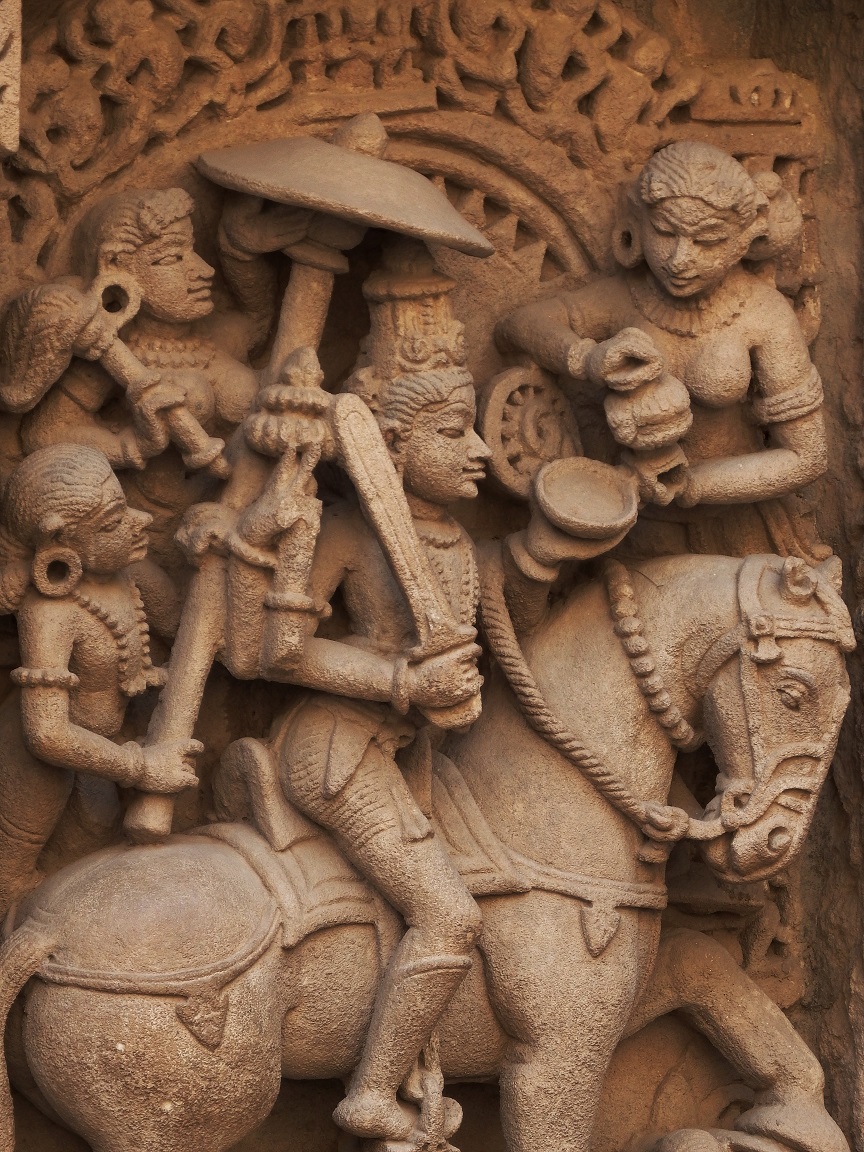
On the Saturday that we visited the Step Wells, we also stopped at the Sun Temple in Gujarat.  It was built in a time frame similar to the wells, in the same area, with similar materials, so the techniques and carvings are somewhat similar.


Photo by Mark W. Laughlin
As you enter the park and walk up to the temple, you first come to the edge of the temple pool.  Like the wells, the water level rises and falls with the wet and dry seasons.  It's in the sun, so it has the color of the emerald green algae.
.
Photo by Mark W. Laughlin
Steps are built into the walls, or more like the stones that make up the walls are arranged to form steps.  Apparently, the ceremonies would begin with the leaders proceeding down the steps on the side away from the temple, and swimming across.  Having crossed the water, they would emerge and walk up the steps, into the temple.
Photo by Mark W. Laughlin
There are a half-dozen of these intricate columns in and around the pool area.


Photo by Mark W. Laughlin
 Carvings on surfaces and columns are just as intricate as at the wells.


Photo by Mark W. Laughlin
Lots of folks were sightseeing, taking photos...


Photo by Mark W. Laughlin

...photos of the temple, and of people visiting the temple...


Photo by Mark W. Laughlin
You can see the size of the pool...


Photo by Mark W. Laughlin
By comparison, the temple is actually quite small, just a "1-room" open-air structure in front, and a second 1-room sized building behind it.


Photo by Mark W. Laughlin
 We take our shoes off before entering.


Photo by Mark W. Laughlin
 Just look at the carving...!


Photo by Mark W. Laughlin
 Indian ladies wear such a variety of color !


Photo by Mark W. Laughlin
 These guys were "hanging out" in the rear of the temple.

Photo by Mark W. Laughlin

 I think this is my favorite, for showing scale and structure.


Photo by Mark W. Laughlin
Even the pigeons were cooperating.  They made 3 or 4 tight circles, giving me several opportunities to catch them over the temple.


And then back on the road.  We trekked around for 12-13 hours that day, driving from Vadodara, to Ahmedabad, to Patan and back.  A most productive Saturday !!

Photo by Mark W. Laughlin
Y'all take care,
- Mark

Borrowed from www.maps.google.com

Borrowed from www.maps.google.com

Sun Temple of Gujarat, near Patan.
Constructed in 1026-27 A.D. during the reign of King Bhimdev I of Patan
http://www.gujaratindia.com/about-gujarat/sun-temple.htm


Saturday, February 13, 2016

A Complete Step Well...


So, in the prior step well post (http://writtenpost.blogspot.com/2016/01/anatomy-of-step-well.html), I was showing you a well that had partially collapsed, and then was cleaned up and all the debris removed.  The result was a structure you could "see into," one that had been opened up so the supports, the construction, the complexity of it all, could be seen more clearly.

This second well (Adalaj Stepwell, actually the first one we visited that Saturday) is almost completely intact, and so having seen the other, maybe you can understand better what's going on.

Here, I'm standing at a high point, above the place where the steps are just beginning to go down.  I'm facing toward the "well end", you can see the top of the well shaft at the far, upper left of the photo. This well is smaller than the first, maybe half as wide and two-thirds as deep, maybe that helped its survival, as it was built in a similar period.


Here, we have begun to descend, and I've turned to look back up the steps.

In this one, because the structure is fully sound, you can reach the lowest level.  At this moment, with the quiet of a church, you could feel a certain reverence to the place.  As I mentioned in the other post, these places were far more than just wells, as evidenced by the volume of carvings.  They had the look and feel of temples and were likely used as such from time to time.

Here again, we are looking through the several sets of supports.  The ones in this well were closer together along the length, and so a bit more numerous, almost continuous, which may be a reason for their intact condition.
A couple taking advantage of the quiet and the beauty to take wedding photos.

You can see into the lowest part of the well if you look through the arched doorways, to the most distant wall, which is the far side of the well shaft.


From the blue pool, you look up the 6 or 7 levels, to the sky.  Imagine this, after dark, at ceremony time, with people crowded onto every level, candles and torches in hand...


I love to take photos of people taking photos...

...and here the other photographer and his friend are grinning, 
     ...because he is taking a photo of me taking a photo of him.
   
But in a moment, all that chruchly quiet rushed like smoke up out of a chimney...as several busloads of kids, young teens maybe 12 to 15 years old, came in for a visit.  These young ladies were more well behaved and quiet, while their young male counterparts made enough noise to clear the pigeons out of the place (kids are very similar around the world, no matter which language they are speaking !).
We had seen the kids and buses at a local rest stop before arriving at the well.  I'm guessing that they were a school group, making a special Saturday field trip, likely driving from another local town as we had, to see these historic places.  

So, okay, a little noise...but what are these monuments, these things that show us the history of a place, without the interactions we have with the other people that we see, there and along the way. Such places can be cool, but it's the people that make then more interesting, more fun !


And, speaking of people, here's a gentleman we encountered as we drove along the back roads to get to the wells, Just had a second to get the window down and snap.  I like the photo, I just had it printed on metal, for my photo-wall.  ;-)


Next Stop: The Sun Temple !
Y'all take care !
- Mark


Adalaj Stepwell:  In the village of Adalaj, near Ahmedabad, Gujarat, India.  The stepwell was built in 1499 by Muslim king Mohammed Begda for Queen Rani Roopba.
Phone: +91-99428 02787


Saturday, January 23, 2016

Anatomy of a Step Well...


A quick anatomy lesson...
...anatomy that is, of an 11th century step well in India.

In this case, Rani-ki-vav (the Queen's Stepwell) at Patan, Gujarat, India, built about 1050. 
(yes, 1100 years ago !!)

So, this will take a little explanation.  Look to the far end of this "pit", you will see a well shaft.  I suspect that the beginning of the construction of a step well is to first construct the "well".  


The shaft at this site is 30m (98 ft) deep, so it can reach ground water in the dry season, and 10m (32 ft) in diameter.  It's lined in stone, to keep the surrounding soil from collapsing into the hole.  But, as you can imagine, it would be tough for a woman let's say, to lower a rope and bucket 30m into the ground and then pull it back to the top, so they came up with a better idea.


The bricks and smaller smooth stones at the top of the shaft are stones that modern archaeologists used to rebuild portions of the well that had collapsed years ago.  They take the place of original stones that were much more ornately carved, many of which had been removed from the site years earlier.  The original upper portions of the site (the well and the sides of the step area) had collapsed into the well and so, many stones were taken to build other structures in the area.

Not only is the detail and intricacy of these carvings amazing (this one is about 1m x 0.7m), the number of them is astounding.  All the surfaces you can see of the original structure are covered with them.

So, now for the "steps".  Imagine that you would like to make some steps down to the water level, which during the dry season, is way down at the bottom of the well shaft.  So, instead of building a smooth brick wall for the entire well-shaft, let's say on the East side of the shaft, starting a few feet up from the bottom, you build a few "Roman-looking" arched doors into the wall of the shaft, one above the other, up the East side of the well shaft (which you can't see in these photos, but will be clear in the next post, with photos taken at a fully-intact well).

Then, you back up a calculated distance to the East, and you start digging a trench, with a bottom that slopes downward, toward the bottom of the well shaft, with an angle similar to the angle of steps.  Walk down the steps until you get to water, and at the bottom levels, you can walk all the way until you reach the "Roman-like" arched doors, and look down into the bottom of the well shaft.

The angle that steps take needs to have a "rise/run" (sorry for the math) that is less than 1, or the step angle is too steep.  So let's say the angle is 0.5/1, you wind up with a 200m long trench with steps reaching down to the 100m level.  But we must remember, this is a trench in possibly loose soil, so we need stone walls to keep the soil from collapsing back in.  We also must support the walls of the trench to keep them from falling inward.  What better force to provide support than the opposite wall.  So "beams" span from wall to wall at multiple levels, to keep the walls straight.  These "beams" are supported by columns, in the above photo, you are looking through the several rows of beams/columns.

 ...with a section of open wall, between each "stack" of columns/beams, 
all, i man all, ornately carved.

 ...beautifully...

Here, I've gone down about a third of the way and turned to look back up the steps.  Our feet are on top of the lowest "beam" in each stack, and we are walking beneath a higher and higher stack of beams/columns are we go further into the trench, and further down the steps.

Everything, walls, beams, columns...all intricately carved.

At this site, since the upper portions were collapsing, they don't let you go all the way down to the bottom, could still be unstable.  Here we are looking through supports that are 3-4 levels up from the very bottom.

In the monsoon season, the ground-water level rises until the entire trench is nearly full, so you might only go down a couple of steps before your feet are wet.  As the season gets drier, you must walk further and further down the steps, until at the height of the dry season, you walk basically all the way to the bottom.  

Many years ago, a nearby river flooded it's banks, silting up the well and step area, contributing to the collapse, and obscuring the site for many years.  Recently, the soil on top has been pulled back, the silt removed from the "trench" and the area made into a national-park-like site maintained by Heritage India so folks can come visit.

Quite cool !

Next, a slightly smaller, but completely intact well, also near Ahmadabad.

These sites are not necessarily "remote" but they are outside the town, and not at all easy to find, unless you have a "secret weapon", which for me is Friends (patient friends that will take time to guide you around, and put up with my slow walking, focusing, clicking...).

Y'all take care,
- Mark


Rani-ki-vav (the Queen's Stepwell) at Patan, Gujarat, India.  Built about 1050. 
Address: Near Patan Patola Heritage Museum, Mohan Nagar Socity, Patan, Gujarat 384265

The fourth level is the deepest and leads into a rectangular tank of 9.5 by 9.4 metres, at a depth of 23 metres. The well is located at the westernmost end of the property and consists of a shaft, 10 metres in diameter and 30 metres deep.


Sunday, December 27, 2015

Northern Limit Line...


I made several trips to Seoul in 2014.  One afternoon, as we successfully finished the days meetings, our partner said he'd like to take us some place.  We dropped our bags at the hotel, and headed over to The War Memorial of Korea.


Photo by Mark W. Laughlin
Beautiful place...huge plaza in front...


Photo by Mark W. Laughlin
...large reflecting pool.


One of the most powerful displays I saw was one that I decided not to photograph.  In one of the main rooms, there is a video display on the walls.  The room light is dim, and it looks like you are standing on a black tile floor.  But when the video ends, the lights start to come up, and lights come on under what turns out to be a glass floor.  Just under my feet were the skeletal remains of a young South Korean soldier, discovered during construction of the museum.  He had been listed as "Missing in Action", but has now been found and identified.  His remains were left just where they were found, with shrapnel and shell casings scattered all around, a dramatic way to demonstrate that this wasn't a far-off, foreign war.  It was local, right there in the city, right there among the homes of the thousands and thousands of civilians trying their best to stay out of the way.  A powerful visual indeed.

During the Korean War (1951-1953), the North swept down through the South initially, before terribly costly fighting pushed them back north.  Seoul is near the middle of the Korean Peninsula, and so it changed hands several times as the sides battled back and forth.


Photo by Mark W. Laughlin
Through all this conflagration, the populace, as shown in this photo in the museum, is left to fend for themselves and try their best to get out of the way of the fighting.  Here, civilians scramble to climb across the jagged structure of a bombed-out bridge over the Han River, near Seoul.


Photo by Mark W. Laughlin
The museum has a large indoor area, full of displays and information.  But they also have a huge outdoor display of the various hardware of war.
Photo by Mark W. Laughlin
A P-38 Mustang...


Photo by Mark W. Laughlin
A Saber Jet...


Photo by Mark W. Laughlin
Even a B-52 Bomber !


Photo by Mark W. Laughlin
...and some of the devices developed to defend against them...


Photo by Mark W. Laughlin
Them notice on the left, suspended above a portion of the reflection pool, is a small ship.


Photo by Mark W. Laughlin
You can go aboard, and as we did, we noticed that it was full of holes !


Photo by Mark W. Laughlin
It seems that this is a replica of a patrol Caravel damaged in an attack by North Korean patrol boats in 2002.  The land boundary between North and South is roughly drawn along the 38th Parallel.  But as you go west, the border changes to the center of a large estuary just north and west of Seoul.  As you reach the coast, the boundary becomes a line in the sea (known as the Northern Limit Line), which the North contends was drawn in an unfair way.  The North still contests the line from time to time, sometimes with artillery fire (as in  2010) or with a naval attack, as in 2002.  I wasn't aware of the details of 2002 until I saw a movie on a flight a few weeks back, called Northern Limit Line.


Photo by Mark W. Laughlin


A gattling gun on the fore-deck...


Photo by Mark W. Laughlin


The bridge...shot full of holes...


Photo by Mark W. Laughlin

You can see my friend Harri walking past stone panels mounted on each column...
Photo by Mark W. Laughlin
...each three characters is a soldiers name... 


Photo by Mark W. Laughlin
...1500 names per panel...


Photo by Mark W. Laughlin
...and there were a LOT of columns, a LOT of panels...


Photo by Mark W. Laughlin
(this is just one wing of the museum...)


Check it out:

The War Memorial of Korea
전쟁기념관
29, Itaewon-ro, Yongsan-gu, Seoul
서울특별시 용산구 이태원로 29 (용산동1가)
Tel: +82-2-709-3139, 3114


Photo by Mark W. Laughlin

My favorite Korean restaurant, and favorite dish...Mackerel !!

- Mark